ARE YOU FEEDING SHEEP, OR JUST AMUSING GOATS
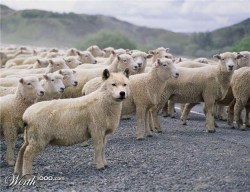
Feeding sheep or Amusing goats
According to William Still. We are called to feed the sheep, even if the sheep do not want to be fed. He is certainly not to become an entertainer of goats. Let goats entertain goats, and let them do it out in goatland. You will certainly not turn goats into sheep by pandering to their goatishness. Do we really believe that the Word of God, by His Spirit, changes, as well as maddens men? If we do, to be evangelists and pastors, feeders of sheep, we must be men of the Word of God” (p. 23).
Sheep need to be rescued
A sheep can be totally lost within a few miles of its home. With no sense of direction and no instinct for finding the fold, a lost sheep usually will walk around in a state of confusion, unrest, and even panic. It needs a shepherd to bring it home.
And so when Jesus saw the crowds, lost, spiritually disoriented, and confused, He likened them to sheep without a shepherd (Matthew 9:36).
Like lost sheep, lost people need a believer, a shepherd–to lead them to the safety of the fold. We do that by pointing the lost toward Jesus, the Good Shepherd who lays down His life for the sheep (John 10:11).
Sheep need to be fed
Sheep spend most of their lives eating and drinking, but they are indiscriminate about their diet. They don’t know the difference between poisonous and non-poisonous plants. Therefore we must carefully guard their diet and provide them with pasture rich with nutrients.
In His encounter with him described in John 21, Jesus drove home to Peter the importance of feeding the sheep. Twice in His command to Peter, Jesus used the Greek term bosko, which means “I feed” (vv. 15, 17).
Our goal as believers is not to please the sheep, but to feed them–not to tickle their ears, but to nourish their souls. We are not to offer merely light snacks of spiritual milk, but the substantial meat of biblical truth. Those who fail to feed the flock are unfit to be shepherds (cf. Jeremiah 23:1-4; Ezekiel 34:2-10).
Sheep need to be led
Peter challenged his fellow believers to “shepherd the flock of God among you” by “exercising oversight” (1 Peter 5:2). God entrusted them with the authority and responsibility of leading the flock. We are accountable for how we lead. (Hebrews13:17).
Besides teaching, the pastor exercises oversight of the flock by the example of his life. Being a pastor requires getting in among the sheep. It is not leadership from above so much as leadership from within. An effective pastor does not herd his sheep from the rear but leads them from the front. They see him and imitate his actions.
The most important asset of spiritual leadership is the power of an exemplary life. First Timothy 4:16 instructs a church leader to, “Pay close attention to yourself and to your teaching; persevere in these things, for as you do this you will ensure salvation both for yourself and for those who hear you.”
Sheep need to be protected
Sheep are almost entirely defenseless–they can’t kick, scratch, bite, jump, or run. When attacked by a predator, they huddle together rather than running away.
Christians need similar protection from error and those who spread it. We need to guard the spiritual sheep from going astray and defend them against the savage wolves that would ravage them. Paul admonished the overseers at Ephesus to stay alert and to protect the churches under their care:
Be on guard for yourselves and for all the flock, among which the Holy Spirit has made you overseers, to shepherd the church of God which He purchased with His own blood. I know that after my departure savage wolves will come in among you, not sparing the flock; and from among your own selves men will arise, speaking perverse things, to draw away the disciples after them (Acts 20:28-30).
Sheep need to be comforted
Sheep lack a self-preservation instinct. They are so humble and meek that if you mistreat them, they are easily crushed in spirit and can simply give up and die. The shepherd must know his sheep’s individual temperaments and take care not to inflict excessive stress.
The Good Shepherd and His Undershepherds
Jesus is the perfect example of a loving shepherd. He epitomizes everything that a spiritual leader should be. Peter called Him the “Chief Shepherd” (1 Peter 5:4). He is our great Rescuer, Leader, Guardian, Protector, and Comforter.
The pastor is called to feed the sheep, even if the sheep do not want to be fed. He is certainly not to become an entertainer of goats. Let goats entertain goats, and let them do it out in goatland. You will certainly not turn goats into sheep by pandering to their goatishness. Do we really believe that the Word of God, by His Spirit, changes, as well as maddens men? If we do, to be evangelists and pastors, feeders of sheep, we must be men of the Word of God” (p. 23).
About these ads
Leave a Comment
 brianhenryblog