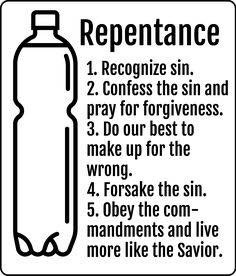
We need to remember that according to scripture, there are only two kinds of people the saved and the lost, not Democrat’s and Republicans, and not Georgia fans and Tennessee fans.
We need to pray for all the lost people including the political crowd that they would become convicted of sin, repent of sin, walk away from sin and confess Jesus as Lord.
We also need to pray for the “Lord Lord Crowd” including politicians, and the “Sunday morning christian crowd”who claim to be saved but still live like the world and show no fruits of repentance.
Finally, we also need to pray for the true believers. Our Lord didn’t merely give us a great suggestion; it is our great commission, and that is the reason we are here.
Evangelism is not listed anywhere as a gift, nor an exclusive activity for the man of the cloth to perform. It is a command and as believers who are called to be evangelists, we are to:
* Go to the lost – Mark 16:15 “Go into the world, preach the Gospel to every creature.”
*Tell the Lost – Romans 10:14 “How are they to call on one they have not believed in? And how are they to believe in one they have not heard of? And how are they to hear without someone preaching to them?
*Compel the lost – 2 Corinthians 5:13-14 “For Christ’s love compels us, because we are convinced that one died for all, and therefore all died. Luke 14:23 And the master said to the servant, ‘Go out to the highways and hedges and compel people to come in, that my house may be filled.”
*Beg/ persuade the lost – 2 Corinthians 5:20 “We beg you on behalf of Christ, we beg you, be reconciled to God.”

Do all sinners go to eternal hell? No, only the ones that aren’t forgiven. Those are the ones that enjoy their sin, and refuse to repent and refuse to walk away from it. How do I become forgiven? By believing in the Lord Jesus Christ and repenting of your sin.
When you put your faith in the Lord Jesus Christ, you are forgiven your sin and given eternal life as a gift of God.
You need to believe in the Lord Jesus Christ.
You need to confess with your mouth Jesus as Lord and believe in your heart the full story of Christ which is ultimately validated by the resurrection.
And if you truly repent and believe in the Lord Jesus Christ, you will be saved forever, from your sin and all its consequences. That’s how the gospel goes.
Now at that point the person might say, “I’m not interested in Jesus Christ.” Then there’s nothing more to say.
It’s not about, “Well wouldn’t you like purpose? Wouldn’t you like happiness. Would you like peace?” That’s not going to help if people don’t believe in Christ. So the goal of evangelism is to present Christ.
That’s why there are four gospels and not four books on psychology.

I read about a little church in my homeland in the British countryside that was established several hundred years ago.
When it was first established they wanted to have no doubt about what they were preaching and so they built a little churchyard around the church itself, and on the front gate they put two pillars and across the pillars an arch. And across the arch it said, “We Preach Christ Crucified.”
And as the years went by, the church changed and in the early years they had planted some ivy as the story goes and as the church changed, the ivy grew. And there came a time when people no longer wanted to talk about the cross.
The preacher wanted to talk more about Jesus as the example, Jesus as the model of human virtue and the ivy grew and covered the last word. And the simple little arch simply said,
“We Preach Christ. “
And the years went by and the leadership changed and the ivy kept growing. And there came leadership in the church who were very concerned about social issues, very concerned about psychological solutions, and that was their message. And the ivy grew and covered the next word, and all that was left was “We Preach.”
There’s a real sense in which that has been the story of the church even in our own country. How much do we hear about the cross? Oh, we hear a lot of preaching about a lot of issues. Once in awhile we even hear someone preaching about Christ.
But how about we preach Christ crucified? I Corinthians 1:23. We preach Christ crucified. Yes, offensive. Foolish for those who are perishing. But to those who are being saved it is what? The power of God, that can transform and save all who believe.


An atheist was seated next to a little girl on an airplane and he turned to her and said, “Do you want to talk? Flights go quicker if you strike up a conversation with your fellow passenger.”
The little girl, who had just started to read her book, replied to the total stranger, “What would you want to talk about?” “Oh, I don’t know,” said the atheist. “How about why there is no God, or no Heaven or Hell, or no life after death?” as he smiled smugly. “
“Okay,” she said. “Those could be interesting topics but let me ask you a question first. A horse, a cow, and a deer all eat the same stuff – grass. Yet a deer excretes little pellets, while a cow turns out a flat patty, but a horse produces clumps. Why do you suppose that is?”
The atheist, visibly surprised by the little girl’s intelligence, thinks about it and says, “Hmmm, I have no idea.”
To which the little girl replies, “Do you really feel qualified to discuss God, Heaven and Hell, or life after death, when you don’t know crap?
And then she went back to reading her book.

It’s indeed sobering to realize that there are people seated in churches every Sunday who suffer from the deadly “Lord, Lord,” delusion. It is abundantly clear that Jesus didn’t hold back in warning His listeners of that imminent, eternal danger.
Hell has many residents who formerly professed faith in Christ. They didn’t “lose their salvation” because that’s biblically impossible (John 10:27–29). They are people who claimed to know Jesus, only to find out that Jesus didn’t know them.
It’s hard to think of any scenario in all of Scripture more horrifying than standing before Christ on Judgment Day with a false assurance of one’s salvation.
Not everyone who says to Me, “Lord, Lord,” will enter the kingdom of heaven, but he who does the will of My Father who is in heaven will enter. Many will say to Me on that day, “Lord, Lord, did we not prophesy in Your name, and in lYour name cast out demons, and in Your name perform many miracles?” And then I will declare to them, “I never knew you; depart from Me, you who practice lawlessness.” (Matthew 7:21–23)
We need to remember that this passage is referring to unsaved church members. It isn’t referring to atheists, pagans, or cult members. Those condemned by Christ in Matthew 7 are people who address Christ as Lord. People who, in all likelihood, have professed some connection to the same gospel that we believe!
Christ’s warning requires distinctions that are far more subtle than the obvious differences between the church and the world. We need to be able to distinguish the dividing line between true and false Christians. Moreover, on a personal level, we need to be able to discern where we really stand with the Lord.
There is no hope of heaven for those who do not believe the gospel. But, the shocking thing is that even among those who believe and say, “Lord, Lord, we preached in your name, we cast out demons in your name, we did mighty works in your name,” there will be those who have no hope of heaven.
The shock is that many who call Jesus “Lord” will be sent by God to eternal hell. This then is a riveting critical passage in a day and a time when lots of people call themselves Christians. There has been no change, no transformation. They have just added “Jesus” without any true commitment to being an obedient slave who is true to his/her master.
It’s sobering to realize that there are people seated in churches every Sunday who suffer from this deadly delusion. And Jesus didn’t hold back in warning His listeners of that imminent, eternal danger.
In Matthew 7:13–27 into six dichotomies, contrasting the way to heaven and the way to hell. There are
two gates,
two ways,
two crowds,
Two behaviors,
two foundations
two destinations.
In each case, only one of them is right.
Are we faithfully preaching the gospel and calling these unsaved church members to conviction of sin, repentance, confession and the need for them to be obedient DOERS and followers of Jesus, and not merely “LORD LORD” SAYERS!
Dear Rachael, I am truly sorry to hear of this deadly cancer. Thank you for all you have done. With your admission that you have only a short time remaining on this earth, the most loving thing I can ever do is tell you that if you are not a believer in, and follower of the Lord Jesus, that you are a lost sinner on the road to hell.
However, the good news is that Jesus died on the cross and paid for your sins, making it possible for you to be reconciled to God, and be assured of a home in heaven one day. I am calling on you to repent and believe!
So, what am I supposed to believe to become a Christian! BELIEVE WHAT?
*Believe,Admit, and Agree you are a sinner.
*Believe, Admit, and agree you are alienated from God, and must truly repent and turn from your sin.
*Believe, Admit and Agree that you are “condemned already” and need a pardon.
*Believe, Admit and Agree that you need to repent (turn your back from sin) and produce fruits of obedience.
*Believe, Admit and Agree that Jesus took your punishment on the cross as your substitute, and is waiting to pardon you.
*Believe, Admit, and Agree that God’s justice was satisfied by the fact that God raised Jesus…from the dead. And when God raised Him from the dead He was saying, “I am satisfied.”
*Believe, Admit and Agree, that the evidence that you are truly a believer is that you produce “fruits of obedience.”
That’s what you BELIEVE! That’s the gospel. And when you believe that by faith, and REPENT, simply trusting God, He, in His mercy takes the righteousness of Jesus Christ and credits it to you because your sins were credited to Christ when He died on the cross. In 2 Corinthians 5:21 we read
“GOD made JESUS who did not know sin to be sin for US, so that WE might become the righteousness of GOD in Him. “
In Acts 2:37-38, after hearing the gospel the people became aware of their guilt as sinners and said, “What shall we do?” And Peter said to them, “Repent and be baptized every one of you in the name of Jesus Christ for the forgiveness of your sins, and you will receive the gift of the Holy Spirit.
In Luke 18:14, the repentant sinner said, “God be merciful to me a sinner.”
So, if you cry out to God in faith trusting, God will hear you and your life will be transformed in a moment. If your faith is weak ask Him to help you to believe. If you need more information read the Gospel of John, and ask God to teach you the truth of Christ.
Praying for you at this time,
Brian Henry