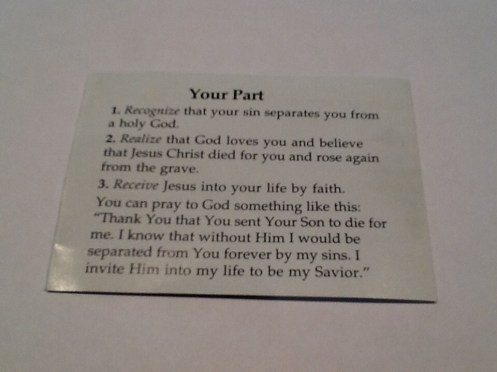
Друг мой! Позвольте задать вам самый важный вопрос на свете, от ответа на который зависит чем будет полна для вас вечность – радостью или тоской. Этот вопрос – получили ли вы спасение? Речь идет не о том, хороший ли вы человек и принадлежите ли вы к какой-нибудь церкви, а о том, получили ли вы спасение? Уверены ли вы, что попадете после смерти на небеса?
Бог говорит, что для того, чтобы попасть на небеса, нужно родиться свыше. В Иоанна 3:7 Иисус сказал Никодиму: „…должно вам родиться свыше”.
В Своем Слове Бог дает нам план как родиться свыше, то есть, как получить спасение. Его план прост. Вы можете спастись прямо сейчас! Как же это сделать?
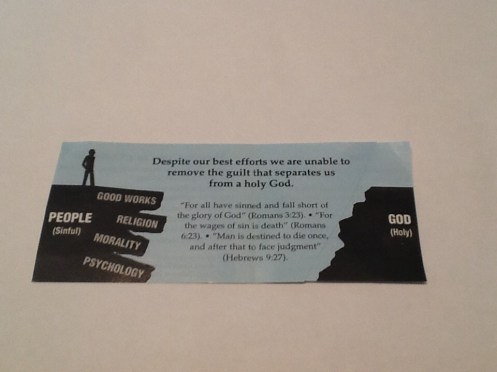
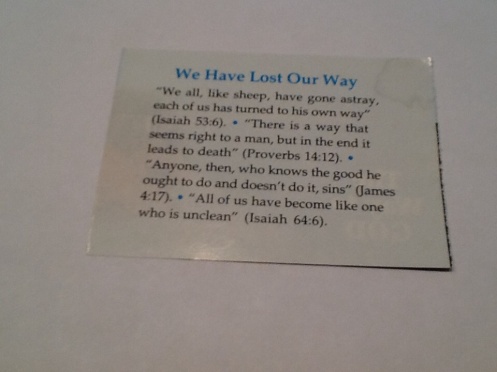
Прежде всего, друг мой, вам необходимо понять, что вы – грешник. „Потому что все согрешили и лишены славы Божией” (Рим. 3:23).
И поскольку вы грешник, вы осуждены на смерть. „Ибо возмездие за грех – смерть” (Рим. 6:23), то есть вечное отделение от Бога в аду.
„И как человекам положено однажды умерать, а потом суд” (Евр. 9:27).
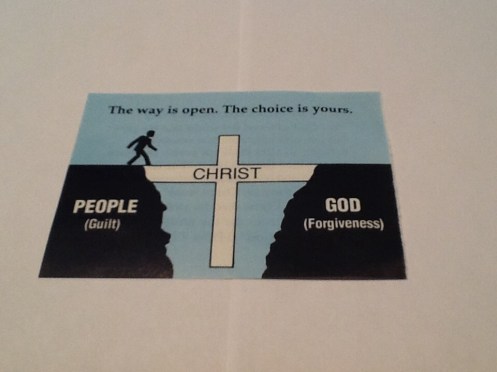
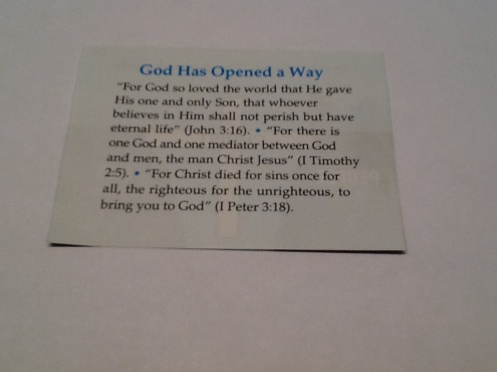
Но Бог так сильно возлюбил вас, что послал Сына Своего единородного, Иисуса, взять на Себя ваши грехи и принять за вас смерть. „Ибо не знавшего греха (Иисуса) Он сделал для нас жертвою за грех, чтобы мы в Нем сделались праведными пред Богом” (2 Кор. 5:21).
Иисус был должен пролить Свою кровь и умереть „…потому что душа тела в крови” (Лев. 17:11) „…и без пролития крови не бывает прощения” (Евр. 9:22).
„Но Бог Свою любовь к нам доказывает тем, что Христос умер за нас, когда мы были еще грешниками” (Рим. 5:8).
Хотя нам и не дано постичь, как это произошло, Бог говорит, что наши грехи были возлохены на Иисуса, Который умер вместо нас, то есть заместил нас. Это истина, ибо Бог не может лгать.
Друг мой, „…Бог ныне повелевает людям всем повсюду покаяться” (Деян. 17:30).
Это покаяние не что иное, как изменение сознания, в результате чего человек соглашается с тем, что он грешник и понимает, что сделал для нас на кресте Иисус.
В Деяниях 16:30-31 стражник из Филипп спрашивает Павла и Силу: „Государи мои! что мне делать, чтобы спастись? Они же сказали: веруй в Господа Иисуса Христа, и спасешься…”
Просто верьте в Него, как в Того, Кто взял на Себя ваши грехи, умер вместо вас, был погребен и воскрешен Богом.
Его воскресение является абсолютной гарантией того, что верующий, принявший Иисуса как Спасителя, имеет вечную жизнь.
„А тем, которые приняли Его, верующим во имя Его, дал власть быть чудами Божиими” (Иоан. 1:12).
„Ибо «всякий, кто призовет имя Господне, спасется»” (Рим. 10:13).
„Всякий”, значит и вы. „Спасется”, значит не возможно или вероятно спасется, а спасется безусловно, наверняка.
Разумеется, вы понимаете, что вы грешник. Покайтесь прямо сейчас, где бы вы ни были, и вознесите в молитве свое сердце к Богу. В Евангелии от Луки 18:13 грешник молился: „Боже! будь милостив ко мне, грешнику!” Помолитесь и вы: „Боже, я знаю, что я грешник. Я верю, что Иисус умер за меня на кресте. Я верю, что ради меня Он пролил Свою кровь, умер, был погребен и воскрес, и сейчас я принимаю Его как моего Спасителя. Благодарю Тебя за прощение моих грехов и за даннвй мне по Твоей милости и благодати дар спасения и вечной жизни. Аминь.”
Доверьтесь Господу и Его Слову и получите спасение по вере. Веруйте, и спасетесь. Ни церковь, ни какая-либо организация, ни добрые дела, сами по себе вас не спасут. Помните: спасиние дает только Бог и другого пути к спасению нет!
Божий план спасения прост: вы грешник и поэтому, если вы не верите в Иисуса, Который умер за вас, вы проведете вечность в аду. Но если вы верите в то, что Он – ваш распятый, погребенный и воскресший Спаситель, вам будут прощены все ваши грехи и вы получите по вере Его дар вечного спасения.
Вы говорите: „Не может быть, чтобы это было так просто”, но это просто! Так говорит Слово Божье. В этом заключается Божий план. Друг мой, поверьте в Иисуса и примите Его как своего Спасителя прямо сейчас.
Если вы не поняли Божий план до конца, читайте эту брошюру снова и снова, пока все в Его плане не станет для вас ясным. Ваша душа дороже всего мира.
„Ибо какая польза человеку, если он приобретет весь мир, а душе своей повредит?” (Марк. 8:36).
Обретите уверенность в своем спасении. Если вы повредите своей душе, вы не попадете на небеса и все потеряете. Пожалуйста, позвольте Богу спасти вас прямо сейчас.
Божье могущество спасет вас, сохранит ваше спасение навсегда и наделит вас способностью жить победоносной христианской жизнью. „Вас постигло искушение не иное, как человеческое; и верен Бог, Который не попустит вам быть искушаемыми сверх сил, но при искушении даст и облегчение, так-чтобы вы могли перенести” (1 Кор. 10:13).
Не доверяйтесь своим чувствам, ибо они переменчивы. Полагайтесь только на Божье обетование, ибо оно неизменно. После того, как вы получили спасение, для дальнейшего духовного роста вам необходимо ежедневно молиться – это ваш разговор с Богом, читать Библию – это разговор Бога с вами и свидетельствовать, то есть говорить о Боге и для Бога.
Кроме того, вам необходимо креститься, чтобы в знак повиновения Господу Иисусу Христу публично засвидетельствовать свое спасение, и незамедлительно стать членом какой-либо основанной на Библии церкви. „Итак не стыдись свидетельства Господа нашего Иисуса Христа…” (2 Тим. 1:8).
„Итак всякого, кто исповедает Меня пред людьми, того исповедаю и Я пред Отцем Моим Небесным” (Мат. 10:32).
Copyright: Robert Ford Porter, 1991
Dear family, friends, students & colleagues I am asking you the most important question of life. Your joy or your sorrow for all eternity depends upon your answer. The question is: Are you saved? It is not a question of how good you are, nor if you are a church member, but are you saved? Are you sure you will go to Heaven when you die?
God says in order to go to Heaven, you must be born again. In John 3:7, Jesus said to Nicodemus, “Ye must be born again.”
In the Bible God gives us the plan of how to be born again which means to be saved. His plan is simple! You can be saved today. How?
First, my friend, you must realize you are a sinner. “For all have sinned, and come short of the glory of God” (Romans 3:23).
Because you are a sinner, you are condemned to death. “For the wages [payment] of sin is death” (Romans 6:23). This includes eternal separation from God in Hell.
“ . . . it is appointed unto men once to die, but after this the judgment” (Hebrews 9:27).
But God loved you so much He gave His only begotten Son, Jesus, to bear your sin and die in your place. “ . . . He hath made Him [Jesus, Who knew no sin] to be sin for us . . . that we might be made the righteousness of God in Him” (2 Corinthians 5:21).
Jesus had to shed His blood and die. “For the life of the flesh is in the blood” (Lev. 17:11). “ . . . without shedding of blood is no remission [pardon]” (Hebrews 9:22).
“ . . . God commendeth His love toward us, in that, while we were yet sinners, Christ died for us” (Romans 5:8).
Although we cannot understand how, God said my sins and your sins were laid upon Jesus and He died in our place. He became our substitute. It is true. God cannot lie.
My friend, “God . . . commandeth all men everywhere to repent” (Acts 17:30). This repentance is a change of mind that agrees with God that one is a sinner, and also agrees with what Jesus did for us on the Cross.
In Acts 16:30-31, the Philippian jailer asked Paul and Silas: “ . . . ‘Sirs, what must I do to be saved?’ And they said, ‘Believe on the Lord Jesus Christ, and thou shalt be saved . . . .’ ”
Simply believe on Him as the one who bore your sin, died in your place, was buried, and whom God resurrected. His resurrection powerfully assures that the believer can claim everlasting life when Jesus is received as Savior.
“But as many as received Him, to them gave He power to become the sons of God, even to them that believe on His name” (John 1:12).
“For whosoever shall call upon the name of the Lord shall be saved.” (Romans 10:13).
Whosoever includes you. Shall be saved means not maybe, nor can, but shall be saved.
Surely, you realize you are a sinner. Right now, wherever you are, repenting, lift your heart to God in prayer.
In Luke 18:13, the sinner prayed: “God be merciful to me a sinner.” Just pray: “Oh God, I know I am a sinner. I believe Jesus was my substitute when He died on the Cross. I believe His shed blood, death, burial, and resurrection were for me. I now receive Him as my Savior. I thank You for the forgiveness of my sins, the gift of salvation and everlasting life, because of Your merciful grace. Amen.”
Just take God at His word and claim His salvation by faith. Believe, and you will be saved. No church, no lodge, no good works can save you. Remember, God does the saving. All of it!
God’s simple plan of salvation is: You are a sinner. Therefore, unless you believe on Jesus Who died in your place, you will spend eternity in Hell. If you believe on Him as your crucified, buried, and risen Savior, you receive forgiveness for all of your sins and His gift of eternal salvation by faith.
You say, “Surely, it cannot be that simple.” Yes, that simple! It is scriptural. It is God’s plan. My friend, believe on Jesus and receive Him as Savior today.
If His plan is not perfectly clear, read this tract over and over, without laying it down, until you understand it. Your soul is worth more than all the world.
“For what shall it profit a man, if he shall gain the whole world and lose his own soul?” (Mark 8:36).
Be sure you are saved. If you lose your soul, you miss Heaven and lose all. Please! Let God save you this very moment.
God’s power will save you, keep you saved, and enable you to live a victorious Christian life. “There hath no temptation taken you but such as is common to man: but God is faithful, Who will not suffer you to be tempted above that ye are able; but will with the temptation also make a way to escape, that ye may be able to bear it” (1 Corinthians 10:13).
Do not trust your feelings. They change. Stand on God’s promises. They never change. After you are saved, there are three things to practice daily for spiritual growth:
Pray — you talk to God.
Read your Bible — God talks to you.
Witness — you talk for God.
You should be baptized in obedience to the Lord Jesus Christ as a public testimony of your salvation, and then unite with a Bible-believing church without delay. “Be not thou therefore ashamed of the testimony of our Lord . . . .” (2 Timothy 1:8)
“Whosoever therefore shall confess [testify of] Me before men, him will I confess also before My Father which is in heaven” (Matthew 10:32).
The first work of gospel proclamation is conviction. In Acts 7 Stephen preaches that great sermon to the Jews in Jerusalem, and essentially it ends the same way as Peters does in Acts 2.
In Acts 7: 51, the end of Stephen’s sermon it reads,
“You men who are stiff-necked and uncircumcised in heart and ears are always resisting the Holy Spirit. You’re doing just what your fathers did. Which one of the prophets did your fathers not persecute? They killed those who had previously announced the coming of the Righteous One, whose betrayers and murderers you have now become.”
You’re just like your fathers. They killed the prophets, and you’ve killed the ones the prophets spoke of. And you, who received the law as ordained by angels, and didn’t keep it. And when they heard this, they were cut to the quick again, and began gnashing their teeth at him. And what did they do? They stoned him to death.
So what do you do? Change the message? Conviction is the first and primary work of gospel preaching. So, they said, brothers, collectively to one another: what do we do? At this point, the first expression of amazing grace appears in apostolic preaching.
Verse 38. Peter said to them, “Repent, and each of you be baptized in the name of Jesus Christ for the forgiveness of your sins; and you will receive the gift of the Holy Spirit.” Is that not shocking grace? How fast did they go from this massive overwhelming trauma, this indictment, to this compassionate, merciful word of grace? “For the promise is for you and your children, and for all who are far off, as many as the Lord our God will call to Himself.” And with many other words he solemnly testified and kept on exhorting them, saying, “Be saved from this perverse generation.” So then, those who had received His word were baptized; and that day there were added about 3,000 souls.
Three thousand had been stabbed to the heart for having murdered the Messiah. They felt the burden of that crime so profoundly that they were fearing the vengeance of God would fall on them instantaneously. They’d cry out, “What shall we do?” Knowing they can’t undo what they did.
They hear this staggering word from Peter, repent, be baptized, receive forgiveness, and you will receive the gift of the Holy Spirit from the one that you executed, who rose from the dead and ascended to heaven, and sits at the right hand. He will give you the same Spirit He has given us.
Peter invites them to repent. But we know what that means, don’t we? Turn and go the other way. Turn and go the opposite way in what you think about Christ, and turn from your sin, the horrible sin of your life which culminated in you killing the Messiah. Turn, and be baptized in the name of Jesus Christ. Make a public profession of Christ, and symbolize it by baptism. Open, public baptism.
That would have been some testimony. In the city of Jerusalem, 3,000 people were baptized, and all 3,000 of them were saying to the entire population of Jerusalem, “We committed a massive crime against the Messiah, and we are now confessing Him as Messiah, Savior, and Lord, and being baptized in His name.” Being united with Him in His death burial and resurrection.
Change your view of Christ. Flee the horror of your wretchedness, culminating in the sin of murdering the Messiah. Peter doesn’t allow for secret disciples. Change your association. Demonstrate a clean break with Judaism. In the name of Jesus Christ. This is a public act of severing your ties with Judaism and a new identification with the Messiah. Big step. Alienation. You will be thrown out of the synagogue, dispossessed from your family. You will be persecuted, and that’s what happened, wasn’t it?
Peter insists on the ordinance of baptism to make the repentance full and public. There’s no salvation in the water. In fact, the better way to translate this, would be to translate it this way: repent, and each of you be baptized in the name of Jesus Christ because of the forgiveness of your sins. When you repent and confess the name of Jesus Christ, you are forgiven sin. Baptism is the obedient act that makes that public. That is consistent through the whole of the New Testament.
For example, Acts 10, Cornelius and his friends believe, receive the Holy Spirit, and then are baptized. Believe, receive the Holy Spirit, and then are baptized. That’s always the pattern. But the magnanimous grace that is here is just absolutely shocking.
You might say, well, I’m a pretty bad sinner. I don’t know if the Lord could forgive me. Well, I don’t think you’re any worse than this group. I don’t know what you’ve done to other people, but you didn’t kill the Son of God. You didn’t murder the Messiah. They did. And grace is extended instantaneously to them, and complete forgiveness if they will repent for their crimes against God, and if they will embrace Jesus, confess Him as Lord, be identified with Him in His death and resurrection, and baptism. Complete forgiveness will be theirs. They will receive forgiveness, and they will receive the gift of the Holy Spirit, who will come to dwell in them as He did those believers on that same day earlier in the day when it all began.
Throughout the whole New Testament baptism always follows salvation. That’s the pattern. If you haven’t been baptized, you’re disobedient. You don’t have any price to pay. You’re not going to get thrown out of something. You’re not going to be alienated from your family, most likely. It’s not going to maybe cost you your life, but it did them.
Baptism’s just a matter of obedience. Not just you, he says, verse 39. “For you and your children all who are far off,” that’s Gentiles. Middle-wall, partition broken down, Ephesians 2. Jew and Gentile, went in the church. This is for everybody. For everybody. For everybody. You, your children, everybody who’s a far off, and oh by the way, as many as the Lord God will call to Himself, and we’re back the sovereignty of God again, aren’t we?
Back in verse 21, did you notice? Everyone who calls on the name of the Lord will be saved. That’s verse 21. Everyone who calls on the name of the Lord will be saved, from Joel 2. Everyone who calls on the name of the Lord will be saved. And in verse 39, as many as the Lord Our God will call to Himself. There are those two things put together without any explanation. DIVINE SOVEREIGNTY AND HUMAN WILL!
Those who had received his word were baptized, and that day there were added 3,000 souls. Somebody wrote a doctoral dissertation on: was there enough water in enough pools in Jerusalem to baptize 3,000 people in one part of a day? There was. I’m not sure how that all works out, but that’s what they did. They must’ve used every available pond, pool. You say, well, why would they need that?
Because there weren’t any Presbyterians yet, so they had to put them under. Do it right.
Can you imagine what was going on in Jerusalem, where all of a sudden 3,000 people in every available part of that city, wherever there was water, there was mass immersion going on of 3,000 people. You’re fairly well into the day by now, and this is going on all over everywhere, and they’re all confessing Jesus as Lord, and Savior, and Messiah, and repenting. Shocking. They listened to Peter and wanted to escape this perverse generation. They needed to escape, because in just a few decades, that whole city would be destroyed in 70 AD. Escape. Escape while you can.
The final results are wonderful. 3,000 people. Nobody, and then 3,120. They kept going from there, and thousands more were added.
Throughout the whole New Testament baptism always follows salvation. That’s the pattern. The command is “Repent and be baptized” Acts 2:38 – If you haven’t been baptized as a believer you are guilty of the sin of disobedience.
Sadly there is so much confusion about baptism in the various Christian denominations. However, this is not a result of the Bible presenting a confusing message on baptism. The Bible is abundantly clear of WHAT BAPTISM IS, WHO IT IS FOR , AND WHAT IT ACCOMPLISHES.
In the Bible, only believers who had placed their faith in Christ were baptized – as a public testimony of their faith and identification with Him (Acts 2:38; Romans 6:3-4). Water baptism by immersion is a step of obedience after faith in Christ. It is a proclamation of faith in Christ, a statement of submission to Him, and an identification with His death, burial, and resurrection.
With this in view, infant sprinkling is not a Biblical practice.
An infant cannot place his or her faith in Christ.
An infant cannot make a conscious decision to obey Christ.
An infant cannot understand what water baptism symbolizes.
The Bible does not record any infants being baptized. How does pouring or sprinkling illustrate the death, burial, and resurrection of Jesus Christ?
Many Christians who practice infant sprinkling do so because they mistakenly have been taught that infant sprinkling is the new covenant equivalent of circumcision. In this view, just as circumcision joined a Hebrew to the Abrahamic and Mosaic covenants, so baptism joined a person to the New Covenant of salvation through Jesus Christ.
This view is unbiblical. The New Testament nowhere describes baptism as the New Covenant replacement for Old Covenant circumcision. The New Testament nowhere describes baptism as a sign of the New Covenant. It is faith in Jesus Christ that enables a person to enjoy the blessings of the New Covenant (1 Corinthians 11:25; 2 Corinthians 3:6; Hebrews 9:15).
Baptism does not save a person. It does not matter if you were baptized by immersion, pouring, or sprinkling – if you have not first trusted in Christ for salvation, baptism (no matter the method) is meaningless and useless.
Water baptism by immersion is a step of obedience to be done after salvation as a public profession of faith in Christ and identification with Him.
Infant baptism does not fit the Biblical definition of baptism or the Biblical method of baptism.
Should Christian parents wish to dedicate their child to Christ, then a baby dedication service would not be unbiblical.
However, even if infants are dedicated to the Lord, when they grow up they will still have to make a personal decision to believe in Jesus Christ in order to be saved, and be obedient to the commandment to “Repent and be baptized.”
You will not find infant sprinkling in the Bible. You have to go to a seminary to be taught it, or read books on theology, or follow the traditions of men.
HAVE YOU LOST YOUR FIRST LOVE?
This week I have been camping on Revelation 2: 4-5, and have been challenged and deeply moved. It is directed at a group of Christians in the city of Ephesus, and applies equally to you and me. It reads:
4 “But I have this against you, that you have abandoned the love you had at first. 5 REMEMBER therefore from where you have fallen; REPENT and REPEAT the works you did at first. If not, I will come to you and remove your lampstand from its place, unless you REPENT.”
1. REMEMBER
In 2 Peter 1:12 we read “I write these things to put you in remembrance.” Go back and REMEMBER what you felt at the beginning when you were overwhelmed with joy.
You couldn’t get enough Bible teaching.
You couldn’t get enough time alone with the Lord, couldn’t get enough Christian fellowship.
You couldn’t talk about Jesus to the people around you enough.
You couldn’t get enough of him.
REMEMBER the flashes of first love, because if you don’t, you follow the path of a diminishing love. You follow it right into compromise, and then into corruption.
Look at your life.
Is there anything you love more than Christ?
Is there anything you want more than Christ?
Is there anyone that you want to serve more than Christ?
Anyone you might want to honor more than Christ?
Anyone you might want to proclaim more than Christ?
If there is, you left your first love. Go back and remember how it was, or find out how it is for people transformed from a Pagan environment.
2. REPENT. Secondly he says, “not only REMEMBER from where you have fallen,” and by the way, where you have fallen indicates this is sin.
Leaving your first love is sin. That’s why you have fallen. It is a fall. And when you have fallen into sin, you need then to REPENT.
He says repent there in verse 5, and he repeats it again at the end of the verse, “unless you REPENT the judgment will come.” The second thing is to REPENT. That means you need to:
Confess the sin of losing your first love, or leaving your first love.
Confess the sin of your coldness.
Confess the sin of the sort of routine approach to worship and everything else in your Christian life.
Confess the sin of serving the Lord without exuberance, without joy.
Confess the sin of only doing your duty.
Confess the sin of doing what you do because you think somebody wants to see you do it, and therefore somehow will think well of you.
If you love your theology more than Christ, you’ve left your first love. There was a time when you didn’t know enough theology to love it, and you just loved him. Paul says that, “I may know him.” He loved him so much he could never get enough of him. And so, REPENT.
3. REPEAT – And thirdly, he says, “REPEAT”. Do what you did at first.
Go back. When you were swept up in:
PRAYER
WORSHIP
BIBLE STUDY
FELLOWSHIP
WITNESSING
and it was all so exhilarating. Basic Christianity! REMEMBER how it was, how it is, for people transformed. And if you have fallen, REPENT because it’s a sin not to love him with all your heart, soul, mind and strength. I don’t know if you often ask for forgiveness for that sin, but you should, and so should I. And then begin to REPEAT the things you did at first when you were swept up in the joy of salvation.
It is a disaster, but it’s a silent killer when a group of believers leaves their first love. And they don’t necessarily see it. If you stop loving Christ and making him the focus of everything, and you will descend in the COMPROMISE with the world, and the whole idea of loving Christ will disappear from your vocabulary, and then you’ll go from COMPROMISE to CORRUPTION.
In other words, you’ll go from Ephesus to become a church like the one in Pergamus, to become a church like the one in Thyatira, to become a church like Laodecia which was dead. And it all starts with losing your first love for your SAVIOR and LORD.